

Aakash Chopra has said that Rishabh Pant’s attacking approach in India’s second innings in the WTC final had a lot to do with self-belief against the swinging ball or his attempt to do justice to his reputation of being a game-changer.
Aakash Chopra, former India opener has said that Rishabh Pant’s attacking approach in India’s second innings in the WTC final against New Zealand wasn’t the need of the hour.

Aakash Chopra: Rishabh Pant’s Approach On The Final 6th Day Was A Reflection Of His Belief In His Skills
Despite losing regular wickets at the other end, dashing keeper Rishabh Pant continued to charge down the track and swing against the New Zealand seamers. Most of the time, the Indian wicketkeeper-batsman failed to make contact but that did not deter him from sticking to his approach.
“Pant’s approach on the final day was either a reflection of his belief (or lack of it) in his skills against the swinging ball, or perhaps he was trapped in the cage of his own reputation. We have seen him do all sorts of unbelievable things with the bat. Who would dream of reverse-scooping James Anderson in Tests or Jofra Archer in white-ball cricket?” Aakash Chopra wrote in his column for ESPNCricinfo.

Aakash Chopra found Rishabh Pant’s repeated attempts to step out and hit the seamers was a bit ‘odd’ as his methods weren’t aligned with what the team wanted at that moment.
“Still, we had never seen Pant dance down the track to fast bowlers, even in white-ball cricket. He prefers playing from the crease, or going further inside the crease. So his stepping out felt a little odd. Was he not told at lunch that his methods weren’t aligned with what the team wanted? Or was the plan indeed to stay aggressive, which meant the batters needed to find their ways to accumulate runs in trying conditions?” he wrote.
Rishabh Pant, who failed with the bat in the first innings scoring only 4 runs was the top scorer in India’s otherwise poor display with the willow as he managed 41 runs in India’s score of 170.
Aakash Chopra: Twin Wickets Of Virat Kohli And Cheteshwar Pujara Put India On The Back Foot
The attacking left-hander was in fact dismissed after he charged down the track and tried to hit NZ pacer Trent Boult through mid-wicket after getting a top edge.
“They might have started the final day with the thought of forcing a result, but the twin wickets of Virat Kohli and Cheteshwar Pujara put them on the back foot in the first hour. Ajinkya Rahane never looked settled and Rishabh Pant kept taking his chances; he was fortunate to be unbeaten at lunch” Chopra wrote.
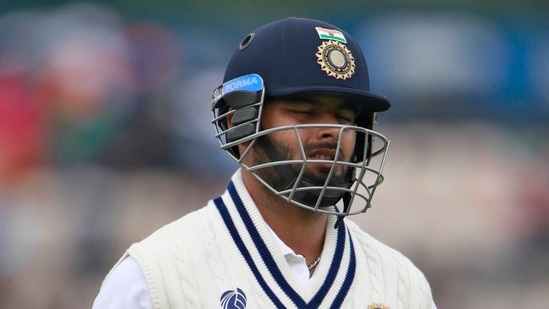
The former India opener, however, did not forget to remind everyone that the same methods have brought Rishabh Pant success in Australia and also in the home series against England.
“Pant has allowed India to hope and believe ever since he made it back into the Test side. The innings in Sydney was full of bravado. The one that followed, at the Gabba will go down in history as one of the finest by an Indian batter in the fourth innings of a Test match. Pant’s century against England was about controlled aggression – an innings of a man coming of age in Test cricket,” Chopra pointed out.
“He had started leaving a lot of deliveries alone, stopped playing against the spin or swing, and showed how much damage-controlled aggression can do. He was not only India’s version of an Adam Gilchrist-like keeper-batter but also allowed India to field five bowlers without worrying too much about their batting depth.”
Rishabh Pant scored 274 runs at an average of 68.50 in five innings for India against Australia. The keeper continued his form against England where he hit 270 runs at an average of 54.00. He managed 707 runs averaging 39.27 at a strike rate of 66.26.