

The reverse swing: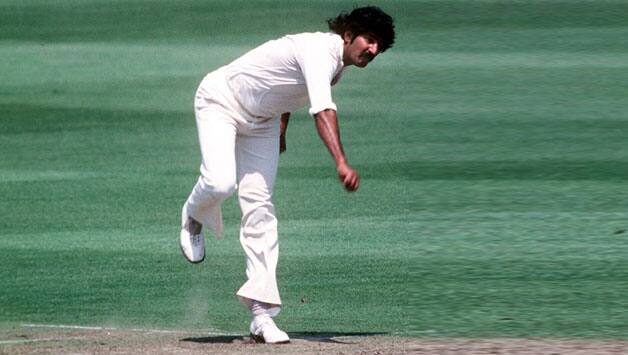
This swing, though, happens late, thus seems more pronounced, and gives batsmen little time to make adjustments. It is all the more difficult for a new batsman or a tailender to face, which explains the staggering number of dramatic collapses in Tests in the late 1980s and early ’90s.
Reverse swing involves so much meticulous devotion it is almost worship. You bounce the wrong side on the grass, and the rough side might lose it a roughness. You place a sweaty palm on the ball and you can kiss reverse swing goodbye.
To trace the evolution of reverse swing is much more difficult. Well before Sarfraz Nawaz made it famous, well before it was given a name, possibly well before it was considered a distinct phenomenon that merited a name, reverse swing was practised in the mohallas and maidans of Pakistan. Sikander Bakht, born in 1957, told Wisden Asia Cricket magazine in 2004 that he reversed it as a schoolboy.
Even in Australia there have been ancient mentions of reverse swing. Imran Khan, who was legendarily handed the art by Sarfraz, also credits Max Walker, who in turn credits Alan Connolly, a Victorian who played 29 Tests for Australia. Connolly was an old-fashioned quick who wanted to run in as hard and bowl as fast as he could, but he found little assistance from the pebbly MCG pitch of the 1960s. He is believed to have borrowed from baseball’s bad-old spitball the idea of loading one side of the ball up with “perspiration and saliva”.
It was only in the late 1970s and 1980s, though, that reverse swing began to be used consistently – allowance needs to be made here for matches not being so assiduously analysed back then as they are now. Imran tormented India in Karachi in 1982-83, stunning them with bursts of five wickets for three runs and three wickets for none in the same innings, after India had been 102 for 1 at tea. The image of Gundappa Viswanath shouldering arms to what looks like a harmless wide delivery only to see his off-stump knocked back is the stuff of legend.
Before that came Sarfraz’s show at the MCG – seven wickets for one run in the space of 33 deliveries – to skittle Australia’s chase of 382 after they had been 305 for 3, but the Wisden report doesn’t mention the word “reverse”.
The world at large might have been ignorant of reverse swing for a long time, but the new sultans of swing, Wasim Akram, and Waqar Younis, made sure it couldn’t look the other way in the late 1980s and the early ’90s. Starting with the series against New Zealand in 1990-91, series after series featured Wasim, Waqar and batting collapses unheard of. Teams would be going swimmingly at about 40 overs for the loss of one or two wickets, and then disintegrate spectacularly. Wasim took two hat-tricks in Sharjah, and once took four wickets in five balls against West Indies.
The initial reaction to all this was of suspicion, and perhaps further ignorance. Lawsuits have been filed, dirt has been carried in pockets, a Test has been called off, bottle caps have been credited, lozenges have been thought of as cricketing equipment… Whether the ball used to be tampered with or not, whether Pakistan alone did it or not, we will never know, but it will be pointed out – not without merit – that it all became kosher when Zaheer Khan and James Anderson and Brett Lee began to do it too.